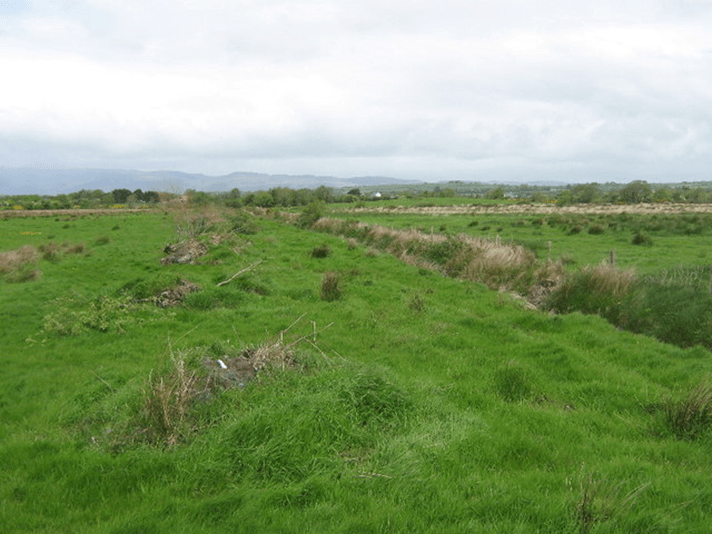
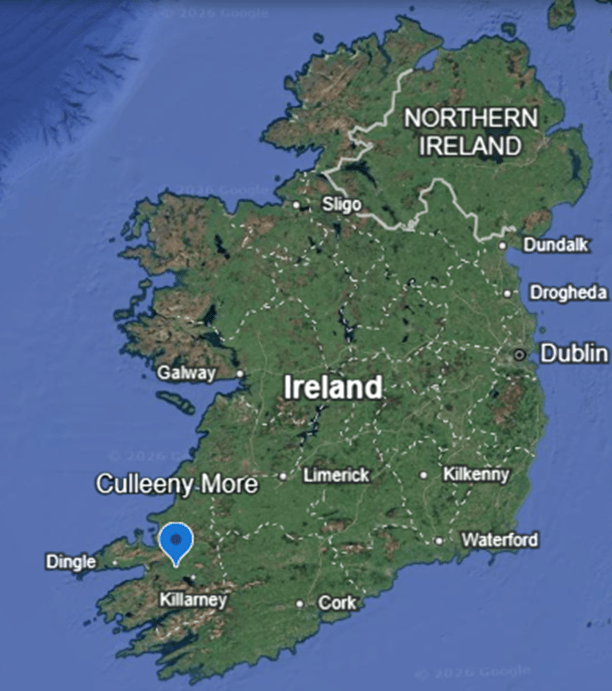
Culleeny More Townland
Daniel Sullivan and his wife Margaret farmed fifty acres in Culleeny More, which is located approximately halfway between Killarney and Killorglin in Conty Kerry. The couple had no children and lived in a comfortable farmhouse. On Easter Sunday morning, the 1st of April 1923, Daniel left home to go to Mass at Listry, which was about an Irish mile from his house. Margaret stayed at home that morning in order to prepare their Sunday dinner. When Daniel left both the front and back doors were open. The couple kept a pet lamb in a box in the yard, and as he was leaving Margaret said she would let it out and put it in the field with the rest of the lambs. On his return at about one o’clock Daniel found the front door locked. He went around the rear of the house and entered through the back door. Once in the kitchen he was met by the horrific sight of his wife lying dead on the floor. She had been brutally murdered; her face so mutilated he could barely recognise her. The house had been ransacked from top to bottom. Daniel ran straight to his neighbours and several of them returned with him to the house. One was sent to get a priest. A bloodied hatchet was found, and upstairs a hammer lay beside a broken chest, which had contained the couple’s valuables. Daniel O’Sullivan believed he knew the perpetrator of the crime, a thirty-four-year-old woman named Hannah Flynn. The previous year Flynn had worked as a servant for the O’Sullivan’s, but her employment had been terminated after six months and since then she had been tormenting the couple.
The next day, the 2nd of April, an inquest was held by the Coroner for Killarney, Mr William O’Sullivan. A jury found that Margaret O’Sullivan’s death was due to shock and haemorrhage caused by several blows to the head with a hatchet. Later that evening, Inspector Ryan of the Civic Guard arrested Hannah Flynn and charged her with the wilful murder of Margaret O’Sullivan. She was arrested at a house in Dungeel which was about three miles from the O’Sullivan’s house. A man of no fixed abode, who had served in the Canadian Army, was also arrested but he was soon released after he proved his innocence. A few days later Flynn was remanded to Tralee Jail for a week. Inspector Ryan stated that when she was arrested Hannah Flynn made no reply. At the hearing itself she was indifferent to the proceedings and asked no questions.
A week after the murder Hannah Flynn was brought before the court for a full hearing into the murder. District Justice Mr R. Johnson presided while Mr T. Liston prosecuted. Hannah Flynn was not legally represented. The first person deposed was Daniel O’Sullivan.
Mr Liston. “Do you know the prisoner, Hannah Flynn?”
“Yes; in April last year I employed her for six months as a domestic servant. My wife made the deal; however, I terminated the deal in June because she was worthless in the house and was only causing destruction.”
“How was she being destructive?”
“She turned over a tub of cream and also stole one of my wife’s blouses. She would not obey my wife’s orders or carry out any instructions.”
“How did she take her dismissal?”
“She was very angry after being dismissed and for three weeks running she turned up at night to peg stones at the house.”
“Did you pay her wages when she left?”
“I did.”
“After the three weeks did she stop bothering you?”
“Yes; she caused me no further trouble until the end of October or the beginning of November.”
“What occurred then?”
“I was drawing turf and I had to pass the house where she lived with her father in Dungeel. On my way for the first load of turf she ran out of the house and threw stones at me. I had to gallop the horse to get away from her. That evening on my return with the load of turf she ran out of the house with a brush and broke the handle across me, she then proceeded to beat me with what was left of the handle. She told me that she would have my life.”
“Did anyone witness this assault?”
“Yes; her mother and a sister. I called on her brother Dan to take her away and after a time he did, but she then followed me up the road hitting me with the broken handle.”
“Did she demand money off you?”
“Yes; she demanded fifty shillings off me. The next day I sent my wife with our man, John Teahan, to pay her the money.”
“What did you discover when you returned home from Mass on Sunday the 1st of April?”
“I came to the front door which I found locked, so I went around to the back door and entered the kitchen. I then saw my wife lying in a pool of blood on the floor. She was dead. I did not recognise her face at all; it was cut off. I then went to the house of my neighbour, Thomas Blennerhassett. Lucy Blennerhassett came back with me and looked in from the kitchen door and then went away. I then went to Thady Nolan’s, and someone went for the priest. Thade Nolan and James O’Brien then came with me, and we went back to my house. On entering James O’Brien found a hatchet covered with hair and blood. I went upstairs to the bedroom and found the trunk that my wife kept her money and deposit receipts in a large pocket book, had been broken open. The pocket book and the money were gone. A hammer that I kept in an oiled cloth in a drawer downstairs was lying on the floor beside the trunk.”
“Who owned the hammer and the hatchet?”
“Both the hammer and the hatchet were my property.”
“Would Hannah Flynn have known of their existence?”
“Hannah Flynn knew where I kept them both and also where my wife kept her money.”
“Had your wife started to prepare the dinner before she was attacked?”
“No; nothing had been started; the joint we were supposed to have was still in the same spot as when I left. Also the pet lamb she said she was going to leave out with the other lambs was still in its pen.”
Hannah Flynn. “Why do you say I knew where your wife kept her money?”
“Sure you were in her employment and all over the house.”
“Why did you say I threw stones at the house?”
“Because I saw you do and you struck me with one.”
“You said I struck you with the handle of a brush, didn’t you take the brush out of my hand?”
“I did not.”
“Did you strike me with a four pronged pike on the 4th of June?”
“No.”
Mr Justice Davidson. “Did your wife ever accompany you to Mass?”
“She came with me every Sunday except for the one she was murdered.”
“Was your house usually empty on a Sunday morning then?”
“It was always empty at the time of eleven mass except for the times I had a faithful servant who stayed there, which hasn’t been for twelve months.”
The next witness called was William O’Neill, who recalled meeting Hannah Flynn coming from the direction of the Sullivan’s house on the Sunday morning in question. He stated that she was carrying something under her shawl. Timothy Sullivan, who was with O’Neill, corroborated his story and also stated that he had saluted Flynn and she had returned the salute. At this stage a further remand of the prisoner was sought and granted. As Hannah Flynn was being led from the court she became hysterical and started to scream and grab at the Civic Guards.
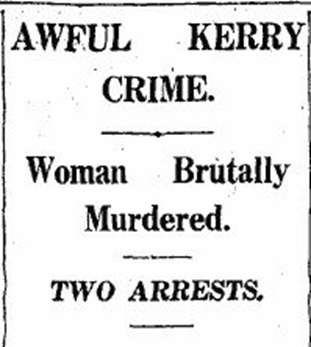
Cork Examiner 4th of April 1923
By the time the case was resumed on Wednesday the 18th of April Flynn was professionally represented by solicitor Mr J. M. Murphy. The first two witnesses called stated they saw the prisoner separately on the night of March 31st, both observing her heading towards the Sullivan’s house. The next witness called was James O’Brien, a shopkeeper who lived a mile from the O’Sullivan’s. He stated he went up to Daniel Sullivan’s house in the company of Thady Nolan at about half past one on the Sunday in question.
“We entered the house together and saw Mrs O’Sullivan lying dead in a pool of blood on the floor. There was blood all over the kitchen. The head was covered in wounds. I searched to see if I could find what had caused the wounds, and I found a hatchet cover with blood; both handle and iron were covered with blood and hair.”
Mr Liston. “Where did you find the hatchet?”
“I found it underneath the stairs beside the wall.”
“What did you do with the hatchet after you found it?”
“I handed it to Thady Nolan, and he put it on top of a press.”
“What did you do next?”
“We went upstairs and saw a trunk with the lid open and thrown back, and the lock broken. There was a hammer beside the trunk. We then went back downstairs and into the parlour off the kitchen and there we saw a chiffonier thrown open and clothes tossed about the floor.”
“How long were you in the house?”
“We remained until the military arrived from Beaufort. They lifted up Mrs O’Sullivan and placed her on the kitchen table.”
Following Thady Nolan’s corroboration of James O’Brien’s testimony, the prisoner was further remanded. In May, after an additional hearing, Hannah Flynn was committed for trial.
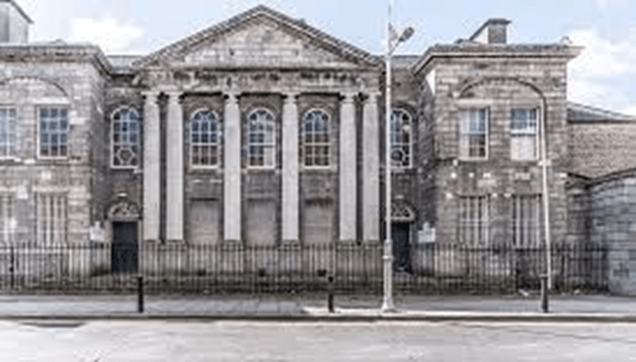
Due to unrest in the country, the trial was delayed until the 27th of February 1924, and was held at Green Street Courthouse, Dublin. The case was overseen by Mr Justice Jonathan E. Pim. The prosecution was led King’s Counsel Mr William Carrigan assisted by Mr Dudley White, while Mr M.J. Lennon represented Hannah Flynn. Mr Carrigan KC opened the case.
“Hannah Flynn is charged with the murder of her former mistress, Margaret O’Sullivan on the 1st of April 1923 at a place about four miles from Killorglin. The murdered woman lived with her husband in a very comfortable residence at Culleeny More. She had been married about eleven years and was in very comfortable circumstances on a holding which was bought for her by a clergyman with whom she had been formerly employed. There was no family, and in April 1922 the prisoner was taken in as a servant. She was not satisfactory and was dismissed in June. After her dismissal the accused conceived the idea that she had been badly treated and for three or four weeks returned to the house and annoyed her former employers by throwing stones etc.. Mr O’Sullivan was attacked while passing the house of the accused, and assaulted; his man was also attacked, and the deceased woman had also been attacked while passing the house. The accused alleged that fifty shillings was due to her, and though no such sum was due, the deceased went to her house and gave her forty-five shillings.
Nothing further occurred until the Easter Sunday morning, the morning of the tragedy. On that morning Mr O’Sullivan went to Mass in Listry chapel, a journey necessitating about three hours in all to get there and back. The deceased was left alone in the house to prepare the dinner, and when her husband returned at one o’clock, a horrible sight presented itself. His wife lay butchered on the kitchen floor. She was in such a mutilated condition that he could not recognise her face, for it had been practically chopped off. The place was reeking with blood, and everything was in disorder. The house was ransacked upstairs and downstairs, and money and securities that had been in the house were stolen. The securities were valued at about £600. Whoever perpetrated the terrible crime had gone out to the yard and washed their hands or clothing in a bucket of water, because a bucket of bloody water was found by the husband of the deceased, his neighbours and friends.
Mrs O’Sullivan was brutally murdered and the house was robbed. Of that there is no doubt, and it is for you to say whether the accused is guilty of that murder. It is alleged that the murder took place a short while after the husband left for Mass, for no preparation had been made for the dinner. The joint of meat bought the previous day still rested in the larder, and a pet lamb which the deceased was accustomed to feed was still in its pen. When the neighbours came to the house a hatchet covered with blood and hair was found under the stairs. The hair was that of Mrs O’Sullivan, and it was covered in blood; it was found clinging to the blade of the weapon. There is no doubt that the hatchet was the instrument of the butchery. A hammer that was found. had not been used in the butchery but it had been used to break open the trunk upstairs. The military were the first to come on the scene, and later the Civic Guards.
When the Civic Guards came to the house, Sergeant O’Rourke observed that leading from the house across a potato field to a stile there was several remarkable footprints, footprints of a remarkable character. There were potato ridges and in the burrows in the field, was the tracks of a woman’s boots with long paces between them; paces that people have to take when crossing such ridges. The prisoner was not arrested until the following evening, Monday the 2nd of April. She was arrested in Killorglin, about a mile from where she lived with her people in a labourer’s cottage. The prisoner was found to be wearing boots that exactly matched the footprints in the potato field, and those footprints were remarkable because one was bigger than the other. The boots found on the accused on the occasion of her arrest were not of the same pair, and as I have said, they matched exactly the footprints in the potato field.
When arrested, the prisoner made a statement which proved to be false. She said on the night before the murder she left her father’s house between six and seven o’clock to go to Tralee to look for work. Tralee is eighteen miles away, and when she got there she said someone wanted to hire her but the wages she was offered were too low and she would not take them. She also said she stayed in a house in the town, which she could not locate, and left at seven o’clock in the morning to return home. Witnesses will, however, be called to prove that on Saturday night at about ten o’clock, a woman similar to the accused was seen near the house of the deceased, and five witnesses will prove that at eleven o’clock the next morning the accused was seen coming from the direction of Mrs Sullivan’s house and going towards her own home. She was then wearing a shawl, and when the people passed her, she was carrying something under it. This case is truly a terrible and revolting one, but I am sure when you hear the evidence there will be no room for any doubt in your mind that Hannah Flynn brutally murdered Margaret O’Sullivan on the 1st of April 1923.”
The first witness to be called was Daniel O’Sullivan,
Mr Carrigan KC. “Why did you terminate Hannah Flynn’s employment after only a couple of months?”
“She was too much a thief around the place and she was disobedient.”
“Did she ever threaten you?”
“Yes; she said she would have my life.”
“Tell us about the day of the murder?”
“I left home at about ten o’clock to go to Mass. On returning at one o’clock I found the front door locked and the key inside. I went around to the back door and upon entering the kitchen I saw my wife lying on the floor in a pool of blood.”
At this point Daniel O’Sullivan became extremely upset and Judge Pim suggested to counsel that those harrowing details might be obtained from another witness. After regaining his composure he stated that he then left the house to call on his neighbours and send a messenger for a priest.
Mr Lennon. “Was your house ever raided during the Civil War?”
“No; despite all the disturbances my house was never raided by any side nor was I threatened.”
The next witness was Dr Sheehan, Medical Officer from Milltown, who had performed the post mortem on Margaret O’Sullivan. He stated that there was eight wounds on the head and face, and the skull and face bones had been fractured.
Mr Carrigan KC. “Could all of the wounds have been caused by this hatchet that I am holding?”
“Yes; some of the wounds would have been caused by the sharp edge of the hatchet and the others by the blunt part of it.”
Mr Lennon. “Was there a great deal of violence used in the assault?”
“Yes.”
“Does that suggest that the assailant was a strong person?”
“No; any person with moderate strength armed with a hatchet could have caused the wounds.”
Mr Carrigan KC. “Was death caused by one specific wound?”
“No one wound on its own would have caused death.”
“Can you say which was the first wound inflicted?”
“I believe the first blows were struck to the back of Mrs O’Sullivan’s head.”
Several other witnesses were called by the prosecution. Mrs Mary Flynn swore that about a month before the murder she had seen Mrs O’Sullivan driving in a trap along the road as Hannah Flynn was clapping her hands with two other girls trying to startle the horse. She then saw Flynn bend down as if she was looking for stones. “Throughout this Mrs O’Sullivan maintained a defensive position as if she was expecting to be hit with a stone.”. Patrick Healy, another witness, stated that he was going fishing on the morning of the murder and saw Hannah Flynn coming from the direction of the Sullivan’s house at about eleven o’clock. William O’Neill, who had previously testified before the magistrates, confirmed his earlier statement regarding seeing Flynn approximately a mile from the Sullivan residence. He observed Flynn wearing a shawl and carrying an item underneath it at around eleven o’clock. Four other sightings of Flynn in the vicinity of the murder that morning were also taken into evidence.
The next witness called was Sergeant Reilly who provided testimony regarding the discovery of footprints in the potato field behind the Sullivan’s house.
“When I arrested the accused the next day at her father’s house she was wearing a pair of boots one of which was longer and broader than the other. These boots exactly corresponded with the boot prints I had found in the potato field.”
Dr Bartholomew Hackett, the Medical Officer of Mountjoy Prison, was next to testify. He stated that Hannah Flynn had been in Montjoy since the 3rd of February and was placed under special observation. He found her to be a woman of low intelligence but with enough to be able to plead. Dr. Hackett was the final witness presented by the prosecution, after which they concluded their case.
Mr Lennon called no defence witnesses before he addressed the jury.
“The crime was certainly an atrocious one, as atrocious as was ever committed even in the age of violence. The crime would have taken some time to commit; the hatchet was large and heavy and one that required a strong person to wield. When Hannah Flynn was arrested she was wearing a white blouse, and there was no signs of bloodstaining on her clothing. It would have been an extraordinary thing on the part of the accused to have taken the dead woman’s shawl and worn it on the day of the tragedy and the day after. Nobody saw the crime committed, and though in the house there was pools of blood there was still not a trace of blood on the prisoner. The whole evidence against the girl is the footprints in the potato field, and I submit that cannot be relied on. It was stated that the boots of the accused fitted exactly into the clay mark, but we all know that these footprints should be larger than the boot that made them. I submit also that the accused could never have wielded the hatchet in question. She is a woman of moderate physique, and it would take a strong man to wield it eight times.”
After Mr Lennon concluded his address, Mr Justice Pim charged the jury and sent them out to deliberate on a verdict. After less than a half an hour they returned and the foreman stated they had a disagreement.
Mr Justice Pim. “Is the disagreement in reference to the mental condition of the prisoner or with regard to the facts?”
“It is in reference to the facts. It is a doubt as to the actual committal of the crime by the accused.”
“Go back and give further consideration to the facts.”
The jury again retired and after a further fifty minutes of deliberation they returned with a verdict of guilty and a strong recommendation for mercy due to the prisoner’s low mentality. Justice Pim asked Hannah Flynn had she anything to say as to why the sentence of death should not be passed upon her. She simply rested on the bar of the dock and stayed silent.
Mr Justice Pim. “The jury have recommended mercy, and I shall also recommend you to mercy on account of what you are and I will do it strongly. I have now only to pronounce the dreadful sentence of the law on those who kill their fellow beings.”
The Justice then sentenced her to be hanged on the 27th of March. Only then did Hannah Flynn react, she broke down and was led from the dock weeping loudly. A week later following a meeting of the Executive Council she was reprieved and her sentence was commuted to penal servitude for life.
Hannah Flynn spent eighteen years in Mountjoy Prison before she was conditionally released into the charge of the Good Shepard Magdalen Laundry in Limerick on the 22nd of October 1942.
Taken from My Book Lady Killers
 Pat Doran Author
Leave a comment